How to Create Better Video Content on a Budget (Without Sacrificing Quality)
Introduction
Let me be straight with you: my first paid video gig was filmed on an iPhone. Not a cinema camera. Not a $5,000 setup. An iPhone. And the client was happy. That's not a flex — it's a reminder that the gear isn't what makes the video. You make the video. The gear just captures it. Whether you're a small business owner trying to create content without blowing your budget, or you're just starting your journey in video production, this post is for you. I'm going to walk you through exactly what to buy, what to skip, and the one mindset shift that changes everything.
Tip 1: Your iPhone Is a Professional Camera — Use It Like One
If you're just getting started and can't justify a dedicated camera yet, stop waiting. The latest iPhone — especially the iPhone 17 Pro — shoots in professional recording formats that rival cameras costing several times more. To unlock its full capabilities, pick up an Angel Weos adapter or a Condor Blue adapter that lets you plug in a CFexpress Type B card directly to your phone. This gives you access to the full range of recording formats the iPhone supports, and suddenly you've got a legitimately powerful production tool in your pocket. If you're ready to step up to a dedicated camera but want to stay under $1,000, look at the Canon PowerShot G7 X Mark III. It's compact, capable, and a smart first step before you start worrying about interchangeable lenses and bodies. Budget reality check: Start with what you have. Upgrade when you've outgrown it — not before.
Tip 2: Light Is Everything — Invest Here Before Anywhere Else
If I could tell every new creator one thing, it would be this: a great light will do more for your video quality than a great camera. My go-to recommendation for an affordable, powerful setup is the Aputure Halo 300X. It's compact, punchy, and versatile. Here's how to build a simple budget lighting kit around it.
Aputure Halo 300X — your main light source
Light stand with boom arm (~$27–$30) — gives you flexible positioning
Magic cloth or shower curtain (~$180 for a 6x6 from B&H) — diffuses the light into a wide, soft source that wraps beautifully around your subject
That diffusion layer is the secret. Instead of a harsh, direct light, you get a big, soft source that looks like you shot in a professional studio. Total investment for this setup: roughly $200–$230. That's a small price to pay for the single biggest visual upgrade you can make.
Tip 3: Don't Neglect Audio — Your Viewers Will Click Away
Bad audio kills good video. People will watch shaky footage, but they will not sit through muddy, hard-to-hear audio. It's non-negotiable. The good news: you don't have to spend much to get it right. Two wireless mic systems I'd recommend without hesitation:
DJI Mics — clean, simple, reliable
Hollyland Mics — another solid option at a similar price point
Both can record directly into your camera or internally, and syncing the audio in editing is easy. Either option keeps you well under $300 and sounds professional.
Tip 4: Stop Spending on Gear Before You Spend on Knowledge
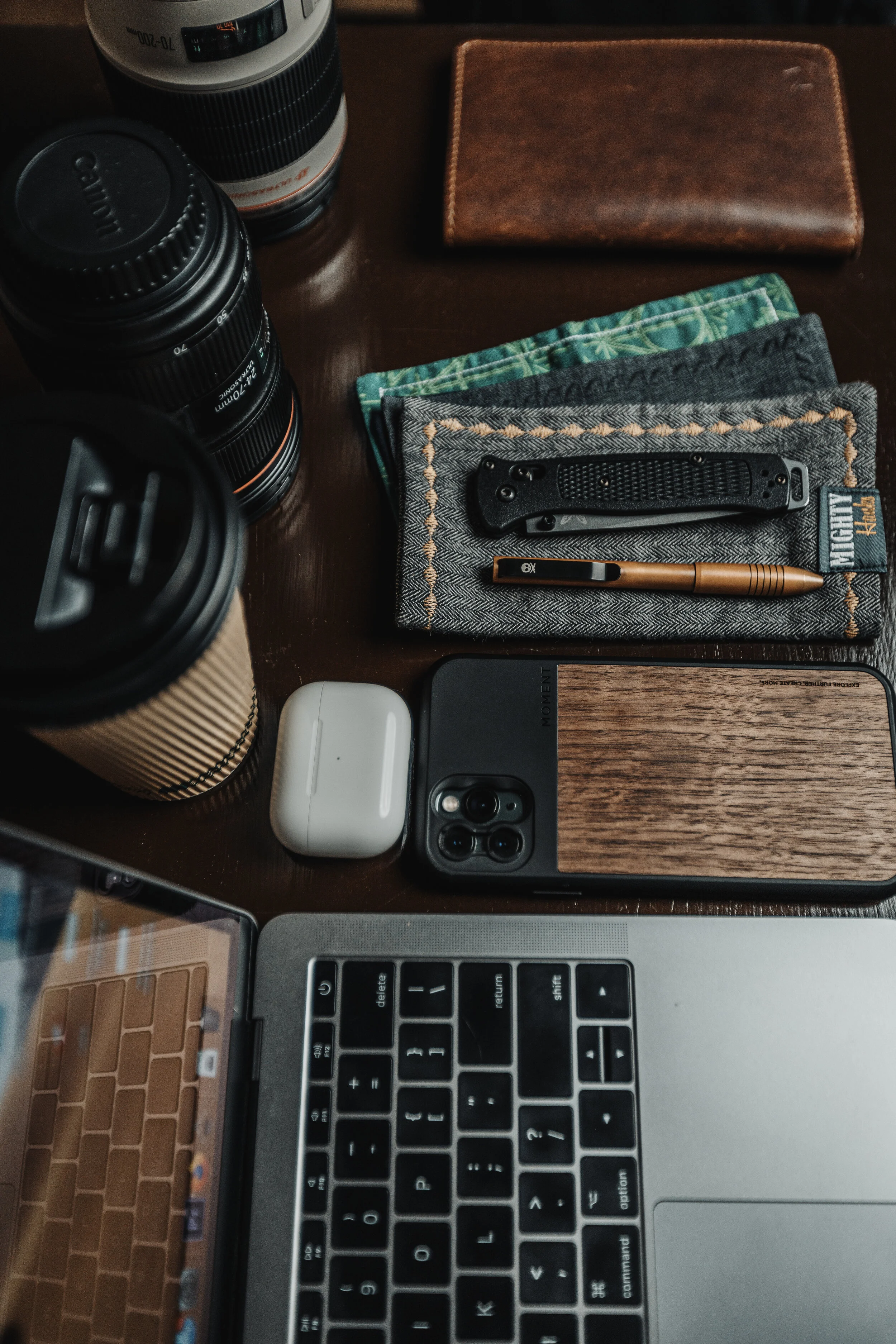
Here's the mistake I see over and over again: someone drops everything they have on a camera body — then has nothing left for lenses, lighting, or audio. So the footage looks worse than it would have on an iPhone with a decent light, and now they're confused and frustrated. The camera is a tool. It captures the image. But you have to know how to light it, frame it, and tell a story with it. If you don't have those skills yet, no camera is going to save you. Composition, lighting, framing, pacing, storytelling — these are the skills that separate good video from forgettable video. And you can learn all of them on an iPhone. I know because that's exactly how I started. Invest in your craft first. The gear will follow.
Tip 5: A Variable ND Filter Is the Cheap Upgrade That Changes Everything
Once you do have a camera with interchangeable lenses, one of the highest-ROI purchases you can make is a variable neutral density (ND) filter. Think of it as sunglasses for your lens. A variable ND filter lets you keep your aperture wide open — giving you that cinematic, blurry-background look everyone loves — even when you're shooting in bright sunlight. Without one, you'd have to close down your aperture to avoid overexposure, and that kills your depth of field. If you live somewhere with intense sun (Texas, I'm looking at you), this isn't optional — it's essential. A decent variable ND filter runs $50–$150 depending on your lens size. It's one of the best returns on investment in your kit.
Tip 6: The Right Tools Free You to Create More
Here's a story that stuck with me. I was working with a client who had genuinely nice equipment — good camera, solid audio setup. But she was constantly struggling to get through her scripts. She'd film a line, stop, play it back, forget where she left off, start again. Sessions that should've taken an hour were taking half a day. The fix? A teleprompter. Once she had one, everything changed. She could read her script naturally, stay on camera, and knock out multiple videos in a single session — what we call batch filming. She went from dreading shoot days to flying through content. The lesson isn't "buy a teleprompter." The lesson is: look at where you're losing time, and solve that problem. Sometimes the most impactful upgrade isn't more camera gear — it's the workflow tool that lets you create faster and with less friction.
Closing: Better Video Doesn't Have to Mean More Money
Great video content isn't about how much you spend. It's about understanding light, audio, storytelling — and using the tools you have to their full potential.
Start with your iPhone. Get a strong, diffused light. Invest in clean audio. Learn your craft before you spend on gear. And when you're ready to level up, do it strategically — one problem at a time.
If you're building a content strategy for your business and want help figuring out where to start, let's talk. At Y Not Tony Media, we help small businesses and creators show up on video with confidence — no matter where they're starting from.
Tony Gonzales is the founder of Y Not Tony Media, a video production and marketing strategy company helping small businesses and creators show up powerfully on camera.